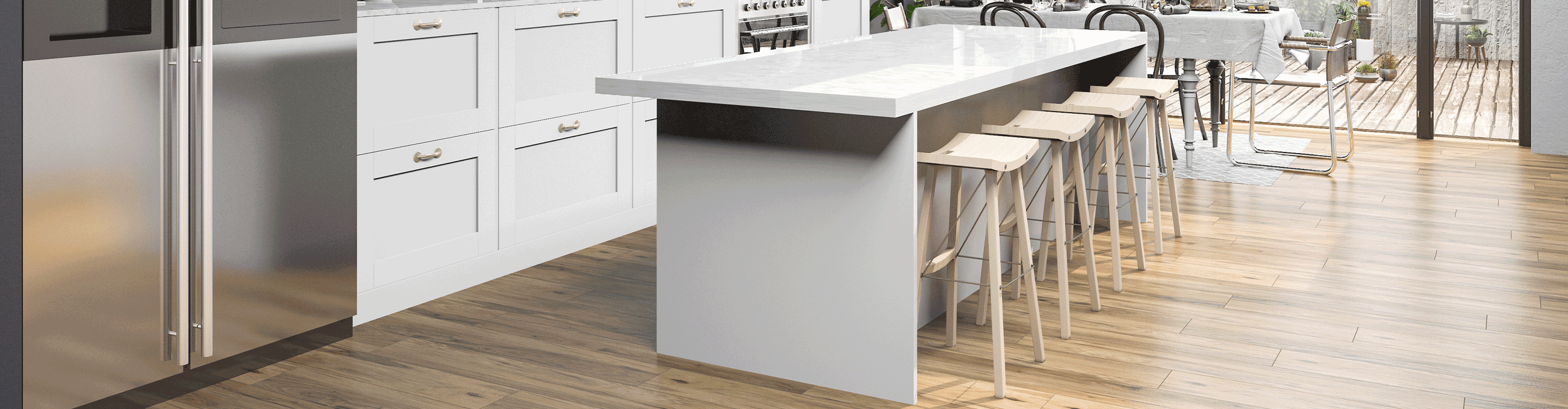
The kitchen is one of the most demanding rooms in your home for flooring. High foot traffic, spills, humidity, and heavy appliances all factor in. The right floor depends on how your kitchen is used, not just how it looks. Here's what to know before you choose.
Kitchen renovations are one of the most rewarding projects you can take on, and the right floor makes all the difference. As your trusted flooring partner, we're here to help you find a kitchen floor that's as functional as it is beautiful. The best choice depends on your household, your cooking habits, and how you want your space to feel.
Before comparing materials, it helps to know what the kitchen actually demands from a floor. A few key factors narrow the field quickly.
The kitchen is a wet environment. Spills, steam, and humidity are constant, so water resistance is the single most important spec to check. Tile and luxury vinyl are waterproof at the product level. Engineered hardwood is water-resistant with proper care. Laminate is not waterproof and should be kept away from areas that see regular moisture exposure. Explore our waterproof flooring options to see which materials qualify.
Kitchen floors take a beating. Heavy foot traffic, dropped pots, and the weight of appliances like refrigerators all test a floor's durability. Tile is among the hardest materials available and handles impact well. LVP and LVT are resilient and scratch-resistant. Hardwood can be refinished over time. Laminate, once damaged, typically needs to be replaced.
The easier a floor is to clean, the better it holds up in a kitchen. Tile, LVT, and LVP can all be swept, mopped, and wiped down without special products. Hardwood requires more care: avoid excess water and use flooring-appropriate cleaners. Always check manufacturer guidelines before using cleaning tools or products, as incorrect use can void your warranty.
Kitchen flooring spans a wide price range. Tile and laminate tend to be more accessible. Hardwood and luxury vinyl products vary significantly depending on the product and species or wear layer. Whatever your budget, there are options across every category.
Here's how the four main kitchen flooring categories compare on the factors that matter most.
Hardwood and kitchens are a better match than most people expect, especially when it comes to engineered hardwood. Engineered hardwood is designed to handle the humidity shifts and moisture exposure that come with the territory. Hardwood also brings a natural warmth and richness to a kitchen that few other materials can match, with species, colors, and finishes to fit nearly any design vision.
Tile remains one of the most popular and practical choices for kitchen floors. It's waterproof, highly durable, and almost effortless to clean. With thousands of styles available, tile is an ideal material for creating a completely custom look. Inlays, borders, and accent pieces allow for a level of design flexibility no other material can match, from sleek and modern to warm and rustic. The number of installation patterns available adds even more options. See our full tile types guide to explore what's available.
Luxury vinyl has become one of the most popular kitchen flooring choices, and for good reason. LVT (luxury vinyl tile) and LVP (luxury vinyl plank) are waterproof, durable, and remarkably easy to maintain, exactly what a well-used kitchen demands. Both realistically replicate the look of hardwood and tile. The difference underfoot is notable too: luxury vinyl is softer and warmer than ceramic tile, which makes a difference in a room where you spend a lot of time standing. For more context on how LVP compares to other options, see our laminate vs. vinyl flooring guide or our best waterproof flooring guide.
Laminate is a budget-friendly alternative to hardwood that works well in kitchen areas that don't see heavy moisture exposure. It realistically mimics the look of wood and is available in a wide range of styles. However, laminate is water-resistant but not fully waterproof, so it's best suited to lower-moisture zones away from the sink and dishwasher. For homes where budget is a priority and the kitchen is relatively low-traffic, it's a practical and attractive choice. Learn more on our laminate flooring guide.
Choosing the best flooring for your kitchen can feel overwhelming with so many quality options available, but our local flooring experts are here to help you through the process. Once you have a sense of the look you want, we'll help you think through your other priorities: budget, maintenance level, and how your household uses the space. We'll help you put it all together.
Tile and luxury vinyl (LVT and LVP) are consistently the top choices for kitchen floors. Both are waterproof, durable, and easy to clean, which aligns well with what a kitchen actually demands.
The best flooring for your kitchen depends on how your household uses the space.
For most kitchens, luxury vinyl is the better choice. LVP and LVT are fully waterproof, while laminate is only water-resistant. In a room that sees regular spills, steam, and heavy use, that distinction matters. Vinyl also tends to be more durable over time in high-traffic kitchen environments. Laminate can work well in kitchens with lower moisture exposure, particularly if budget is a deciding factor. See our laminate vs. vinyl comparison for a detailed breakdown.
Tile is the most durable kitchen flooring material. It's extremely hard, scratch-resistant, and waterproof, and it won't fade, warp, or dent under normal household conditions. Properly installed and maintained, tile can last the lifetime of a home. Luxury vinyl is the next most durable option, offering strong resistance to scratches, moisture, and everyday wear. Engineered hardwood and laminate are durable in their own right but require more care to maintain their appearance over time in a kitchen environment.
Yes, in most cases. LVP is designed to handle the weight of standard household appliances, including refrigerators. The key considerations are the condition of the subfloor, the thickness of the plank, and whether the floor is floating or glued down. A floating LVP floor under a heavy appliance should have furniture pads or a protection mat to distribute weight and prevent indentation over time. When in doubt, check the manufacturer's specifications for load-bearing guidelines, as requirements vary by product.
Large-format tile continues to grow in popularity, with oversized slabs creating a seamless, high-end look with fewer grout lines. Wide-plank LVP in muted, natural tones is also trending, particularly in modern farmhouse and organic-modern kitchen designs. For soft-toned wood looks, light oak and greige finishes have largely replaced the darker wood tones that dominated earlier years. See our guides on modern farmhouse flooring, top flooring trends: oversized tile, and 10 timeless floors for more inspiration.
Thank you for contacting Carpet One Floor & Home. Your local flooring expert will reach out to you regarding your inquiry.